Showing posts with label Festive Recipes. Show all posts

31 October 2012

On Book Covers and Crème Brûlée


They always say "don't judge a book by its cover." As a person who loves books and anything related, I've often wondered about this. I judge books by their covers all the time, especially since I know editors pick book covers in order to say something about the book or appeal to a certain type of reader. When you know the codes, it can become pretty easy to tell if it will be to your taste or not.

I've had a version of this conversation with a caviste (wine seller) in my neighborhood. He assured me that if you know nothing about wine - or at least about any of the wines you have in front of you - choosing by the label is not a bad idea. The domain who makes the wine also chooses the label and it tells you something about their taste. For example, if they make their labels classic, he says, they probably make their wines that way too.

Not only do we judge by covers but we get attached to the outer appearance as well. On, Shelfari, a book website where people can create their own personal shelves, there are often twenty or so cover-options for a single book and you can even upload your own. I mean if you've read the book, you know what's inside. Why should the cover art matter? But it does. I recently uploaded MY cover of the edition of Le temps retrouvé. Because, yes, after starting in a moment of craziness and talking your ears off about it again and again and again, three years later, I've FINALLY finished Marcel Proust's many-volume novel. (I'm not here to go on about it, but let me just say that if I never used French again it would have been worth learning the entire language just to read Proust in the original text. Ok, melodramatic moment over.)


So why do we do it? Why do we judge "covers"? I think, because it saves time and because it's efficient. Maybe because we're often right. We know what certain things look like. We recognize them. Or we extrapolate based on given knowledge and known codes. Mind you, judging by the cover becomes MUCH less reliable when we're outside of our culture. Just go into a bookstore in another country if you don't believe me. In France, every book looks like a dense philosophical essay to me. In England, the colorful covers look like cheap chick lit.

That said, I think we have the expression because we need to be reminded that judging a book by its cover doesn't always work. It has to be a working hypothesis at best. Because life will surprise you. Sometimes things look simple from the outside and when you get closer you find them to be subtle and infinitely complex. Recipes with few ingredients are like that: Poor Man's Soup, Pesto, Shortbread, even Cucumber Salad. Culinary magic.

But the opposite is also true. Sometimes things that look complex from the outside, turn out to be straightforward and simple once you get to know them better. Crème brûlée falls into that category. It intimidated me so much that, even though I got a crème brûlée torch for my last birthday, it took me a whole year to try it out. I got a taste of the bain marie technique when I made Pot de Crème and that's really the only tricky part. Otherwise this recipe is a piece of cake - or, shall we say, a spoonful of crème brûlée?


(serves 4 or 6, depending on the size of your ramekins)

6 egg yolks
80g sugar (about 1/2 cup)
375ml (about 1 1/2 cups) heavy cream
1 vanilla pod
1 Tbsp castor sugar per ramekin

Preheat the oven to 250ºF (130ºC).
Whisk together the egg yolks and sugar until light and fluffy.
Pour the heavy cream into a saucepan. Split the vanilla bean lengthwise and scrape the seeds out into the cream - you can throw the bean in as well - and bring to a boil.
Strain over the egg/sugar mixture. Mix well and pour into ramekins.
Place the ramekins in a large baking pan and pour boiling water into the baking pan until it comes about halfway up the sides of the ramekins.
Cook for about 30 minutes until just set. Remove from the oven and take ramekins out of boiling water. Let cool, then refrigerate for at least 2 hours - overnight is best for the perfect texture.
Right before serving, sprinkle 1 Tbsp of castor sugar over the top of the custard and fire with a crème brûlée torch until sugar is evenly caramelized. If you don't have a torch, you can put your ramekins under the grill setting in the oven for a couple minutes. Watch carefully so they don't burn.
Serve immediately for the perfect warm crunchy topping with cool, creamy custard,

It's not nearly as hard as it may sound. Give it a try and enjoy one of life's surprises!


29 August 2012

Refreshing Lemon-Limeade


Today marks the first official day of a new project, a week of physically and emotionally intensive rehearsals at a theater that has basically turned the keys over to us for a week to do as we please. Yes, they're crazy. But then again so are we - and anyone who throws themselves into something they are passionate about and just trusts the universe will provide.

I guess what I'm saying is that a certain healthy level of insanity is required to live life to the fullest. Marie Forleo - inspiring business woman living out her dreams - says in this interview that ambition is always unrealistic because it hasn't happened yet. I'm paraphrasing but it's a comforting thought because it means that if your dreams and desires are not based in "reality", then you're doing something right, you're on an adventure towards changing that reality into something else.


Of course those of us that cook know all about that.  The history of cooking is full of unrealistic ambitions from "let's eat this big round red fruit of the nightshade family in the hopes it won't actually be poisonous," to "let's break down the molecules of this food, turn it into foam and serve it in a restaurant." You start with some random ingredients, or a list of constraints, or just a wild desire for something particular and off you sail out into the waters of culinary invention perhaps with a recipe or two for guidance -- or not.

In this case, I was looking for a nice before dinner drink that was cooling and non-alcoholic. Enter Lemon-Limeade. I took what looked like a super simple recipe from Food & Wine. Don't be fooled. There are few steps and no special equipment, but unless you have a juicer (I hope you do), you're going to be squeezing lots of lemons and limes by hand. However, this delicious recipe is worth it (as long as you don't have any paper cuts).

1 cup sugar (I used raw sugar, which gave the lemonade a nice rich color)
4 3/4 cups water
3/4 cup fresh squeezed lemon juice
3/4 cup fresh squeezed lime juice
slices for garnish

In a saucepan on high heat, stir the sugar into 1 1/2 cups water until dissolved. Remove from heat BEFORE mixture comes to a boil. Pour into a pitcher and stir in 3 1/4 cups of cold water and lemon and lime juices. Refrigerate until cool. Serve over ice, garnished with lemon or lime slices. Good with appetizers before dinner or to cool off in the afternoon.

05 May 2012

Roast Pork with Rhubarb


Well it's once again the season for rhubarb to start appearing in the markets and across the blogosphere. I can't say I mind. I love the tartness that rhubarb adds to sweet recipes like these Orange-Rhubarb Scones, or to crumbles and pies with sweeter fruits that are also starting to come into season. I have to confess, that, although the days of dowries have long past in France, my wedding agreements with D. may have included a certain number of Strawberry-Rhubarb Pies to be distributed throughout the course of our lives together (meticulously calculated with an equation involving number of pies per season, average life span and other variables).


However, although my CSA seems to think that rhubarb should count as my weekly fruit, I believe rhubarb is more correctly considered a vegetable and like most vegetables, it shines when roasted. To be fair, I did not come up with this idea, but when it comes to sailing off the edge of the culinary map, there's no one I trust more to navigate than Jaime Oliver (see: my slow but steady conversion to his recipes like Wild Mushroom Soup and this Seriously Good Grilled Zucchini Salad). This recipe is surprising and absolutely delicious. Like most of Oliver's recipes, it's not hard to make and whole is greater than the sum of the parts.


(serves 4)


One bunch of fresh sage (I had to go to the three different places to get this, but I think fresh sage is so definitely worth it.)
1 clove garlic, peeled
olive oil
2 pork fillets, trimmed
sea salt and freshly ground black pepper
10 slices Parma ham or prosciutto (I used speck)
7-12 sticks of rhubarb (enough to blanket the bottom of your baking dish)

Crush a good handful of fresh sage in a pestle and mortar. Crush in the garlic and then add 5 tablespoons of olive oil. Rub this mixture all over the pork fillets.  Let marinate for an hour (if you have the time).  Preheat the oven to 425ºF / 220ºC.  Lightly season the pork with salt and pepper, and wrap 5 slices of ham/prosciutto around each fillet.  Cut the rhubarb into finger-sized pieces and place in an appropriately sized roasting tray.  Lay the pork on top of the rhubarb. (You can rub the rest of the marinade into the ham at this point if you like). Sprinkle leftover sage leaves over the dish and drizzle with olive oil.  Get a piece of wax paper, wet it and scrunch it up, lay it over the meat and tuck it in around the sides.

Cook in the preheated oven for 15 mins, remove the paper and cook for another 15 mins.  Remove from the oven and allow to rest for 5 mins.  Slice the meat at an angle in thick slices and serve with juice over the roasted rhubarb. I served this with baked potatoes drizzled with sage butter. Oh, so yum!

03 April 2012

Delicate Champagne Cocktail and Parmesan Tuiles


I made these champagne cocktails for a party this weekend and I am so enchanted with them that I'm using writing this post as an excuse to have another one...you know, for inspiration. So let me be inspired: there's something fruity going on with the grenadine syrup (and, especially for French people, something that reminds you a little bit of being a kid again), something smooth and sweet with the pear juice, something citrus-y and a tinge bitter with the Grand Marnier, and then something absolutely decadent with the champagne. And it doesn't have to be good quality champagne. I'm using cremant d'Alsace which is about a third of the price and just as yummy in this cocktail.

Just perfect for the beginning of party with friends, or for an after-work drink, or for a romantic evening. Delicate and fun enough to toast the warm weather and the return of spring.

Speaking of spring in Paris, even though I live in an area where winter is not too harsh and snow does not keep us inside for months at a time, spring has brought Parisians outside. They come to the parks. They sit at the outdoor tables at cafés and watch people go by. They put away their fondu pots and start thinking about lighter foods.


Simple Champagne Cocktail
(per cocktail)

1 frozen raspberry
1 Tbsp grenadine syrup
1 Tbsp pear juice
1 Tbsp Grand Marnier liqueur
champagne

Put the raspberry in the bottom of the glass. Measure the grenadine and Grand Marnier on top and then pour champagne over it until the glass is full. It layers prettily but the taste is better when you stir it (carefully so the champagne doesn't bubble over).


These Parmesan tuiles (a sort of thin appetizer wafer) are also perfect for spring parties. Not to mention, they go perfectly well with this champagne cocktail. So, since I've been a lazy blogger lately, this time you get two recipes in one post.


Parmesan Tuiles
(makes a good plateful)

25g of flour
100g of Parmesan
1 tsp dried rosemary
2 Tbsp sesame seeds

Mix all the ingredients together in a large bowl. Heat a frying pan on medium heat. When hot, spoon about 1 Tbsp of mixture into the pan and spread thin, almost like a tiny pancake. You can probably do this three or four times in the pan until you run out of space. The Parmesan will melt and when it seems all melty on one side, carefully flip the tuile and cook it on the other side, all in all only a couple minutes. Remove from frying pan and let cool on a rolling pin to give them a nice curved shape. Repeat until you've used all the Parmesan mixture.

Happy spring parties! And happy Easter!

10 September 2011

Back in the City and Wild Mushroom Soup


After the exciting travels of summer vacation, coming back to the city feels a little small (and very smelly). Still, there's another kind of excitement I've always felt when starting over again in the fall. It's the excitement of new notebooks, back-to-school clothes, rows of sharpened pencils and crisp new textbooks that haven't yet driven me crazy. And even though I'm not in school anymore, I always feel a sense of newness in the fall. The theater season starts again, bringing with it new projects, new plays to see, new workshops. People come back from summer vacation. The markets are filling up with fall foods.

Not mention fall brings both D's birthday and mine. Today is D's and since we'll be with friends tonight, I made a special birthday dinner last night to celebrate together. One drawback of being in a couple is that there are certain foods you almost never get to eat because your partner doesn't like them. For me, those foods include spinach, fresh ginger, and anything with wasabi; for D. it's mushrooms. I don't like mushrooms. I appreciate the flavor, but I can't stand the texture and don't have much experience cooking with them. But of course, for D's birthday, I knew mushrooms would be involved.


I looked at a couple different wild mushroom soup recipes to come up with this one. Most helpful was Jaime Oliver's The Real Mushroom Soup, and I give full credit to him for the lemon zest garnish that really makes this dish special.

(for 4 people)

2 Tbsp olive oil
about 600g (21oz) of mixed wild mushrooms (I put in girolles, oyster mushrooms, trompettes de la mort and then some regular cultivated mushrooms because buying wild mushrooms is expensive! You can mix whatever you like best.)
2 cloves of garlic, peeled and minced
3 shallots, peeled and chopped
1 tsp dried thyme
1 tsp dried sage (if you have fresh herbs, even better!)
4 cups chicken or vegetable stock

heavy cream
1 lemon
sea salt
fresh ground pepper

Heat the olive oil in a large saucepan. When hot, pour in the mushrooms and stir for 1 or 2 minutes. Add garlic, shallots, thyme and sage. The mushrooms will start to give off liquid. Simmer, stirring until the liquid is mostly evaporated. At this point, you might want to reserve a couple tablespoons of the mushroom mix for garnish.

Add stock and season to taste. Bring to a boil and simmer for about 20 minutes. Blend the soup in batches, or directly in the pot with a stick blender.

For the garnish: Mix together the zest of 1 lemon with the juice of 1/2 a lemon, a pinch of sea salt and a couple grinds of pepper. When you serve the soup, spoon a little bit of this mixture in the middle of each bowl, place some of the reserved wild mushrooms prettily on top (I'm still working on the "prettily" part, but I'm sure you'll do better) and pour on a tablespoon or so of heavy cream to taste. Enjoy!

27 January 2011

Winter at the Sacre Coeur and Endive, Blue Cheese, Pomegranate Salad


Everyone I know in Paris is tired right now, the have-to-drag-oneself-out-of-bed-in-the-morning kind of tired. Usually this is a February attitude, but it seems to have come a bit early this year. I blame this sort of lagging gloom on the lack of sunlight. A few bright rays on our faces would do all of us a world of good. It's no coincidence that my doctor gives everyone a prescription for vitamin D in the winter, no matter what you go see her for.


But besides vitamin D, what to do for the gray-sky doldrums? The best cure I know for dreariness is to go on a search for beauty. (Tea over at Tea and Cookies puts this into practice regularly in her series Stalking Wonder.) So, I decided if it was going to be gray all winter, then I had better start looking for the beauty in gray skies.


As Dorothy Gale from Kansas says, "if I ever go looking for my heart's desire, I won't look any further than my own back yard. Because if it isn't there, I never really lost it to begin with." So my camera and I set out to find beauty in our own backyard (so to speak - I don't have a back yard, so I'm counting Montmartre).


The Sacre Coeur is probably my favorite monument in Paris. I go by it pretty much every day, and every day it seems different. I swear it changes with the weather. When it's sunny and the sky is blue, it seems to shine out white and proud. These days, it's as sober as the sky, imposing, dark and full of secrets.


I came up the back way and strolled in the park behind the church, which in the summer is full of old people sitting in the shade of the wisteria, young people tanning on the grass, and children playing in the fountain. Today it was deserted. There's something very restful about an empty park, and its sleeping trees. I even found a tiny bit of winter color.


When I was done soaking that in, I followed the sound of a horse drawn carriage to the front of the Sacre Coeur. Really, I'm not kidding. I thought I was hearing things, and when I caught up with it and found it was being driven by a man dressed in bear suit, I thought I was seeing things. I'm sorry I didn't get a picture. The front of the Sacre Coeur is always overrun with tourists, no matter what the season and it was a bit of a shock after the emptiness of the back streets, but there is an amazing view of Paris. Gray, winter-y Paris.


Of course, the other way to combat the winter doldrums is to eat colorful food. You can even pretend its summer and have festive salads, which is what I did when I got home. This endive-pomegranate-blue cheese salad was just perfect for a mood-lifter. I think pomegranate seeds are just perfect for winter salads, not only for their red color and bursting sweet taste, but also because you can pretend you're Persephone thanks to whose love of pomegranate seeds (according to the ancient Greeks), we got into all this winter trouble in the first place!


Ingredients (approx per person):

1 large or 2 small endives
2 Tbsp pomegranate seeds
1 Tbsp blue cheese
2 strips of bacon, fried until crispy (you can leave this out if you're vegetarian, but if you're not, it adds a nice smoky flavor that I highly recommend)
your favorite vinaigrette

Mix it all together in the proportions you like best and enjoy while contemplating the beauty of gray!

13 December 2010

Pot-au-feu or how I can't speak English anymore

(A warning to my vegetarian friends: very meaty photos to follow!)


The longer I live in France, the more trouble I'm going to have writing this blog in English. See, I moved to France right after college, which is when you really start to learn how to do things on your own. Cooking, of course, but also keeping the house clean (instead of just straitening up your room), choosing paint colors, furniture, fixing things that break (or calling the repairman), paying bills, filing pay slips, doing your taxes, etc. All that stuff I learned to do in French and some of it has specific vocabulary that I don't know in English. For example: where do you bring things that are too big for the trash? Is there a word for them? Here they're called les encombrants and you can call the city hall of your arrondissment in Paris, and schedule a pick-up in front of your building on a specific day.

What does that have to do with cooking? Well, yesterday I was complaining to the mom of one of the girls I babysit for that I had a fridge drawer full of root vegetables that was getting out of control: carrots, leeks, turnips, parsnips, potatoes, cabbage (okay, not a root vegetable, but you get the point). She said, "all you need is some meat and you have a pot-au-feu." I'm lucky because this is one of those recipes that everybody's French mother makes and thanks to babysitting, I now have two French mothers who teach me those kinds of things.


Anyway, she told me how much meat to buy and what kind and she suggested buying an os à la moelle to put in. I'd never bought any such thing (I'm a wuss at the butcher's), and so I can't tell you the name in English. All I can say is that it's bone with the marrow in it and the marrow gets all soft and flavorful when cooked in a pot-au-feu.


The French are extremely good at winter food and pot-au-feu is no exception. It's warming, hearty and uses more seasonal vegetables than you would know what to do with otherwise. Traditionally the broth is served as a first course, sometimes with noodles. Then the meat and vegetables are served in a large platter. If you don't want to separate them, you can also serve it in bowls as a sort of French beef stew (don't let any French people know I said to though). Or you can reserve the broth for another soup. Or all of the above. Pot-au-feu is also very tasty as leftovers since the more the flavors sit together the better it is. Go ahead and make more than you'll eat in one meal. If you get sick of it for leftovers, you can always make it into cottage pie.


1.5kg of beef (don't get me started on beef cuts. I don't have any of the vocab for that, but it can be a fattier or tougher cut because you're going to slow cook it for a very long time!)
2 onions
2 cloves

3 carrots
3 leeks
2 turnips
2 parsnips (If you want to get technical I actually used parsley root, but they taste like parsnips to me. You can pretty much use whatever winter vegetables you have)
3 cloves garlic
1 bouquet garni (parsley, thyme and bay leaf)

1 os à la moelle
1 head of Chinese cabbage

500g of potatoes

P.S. It is very hard to get a decent photo of a finished pot-au-feu since, if you've done it right, everything's all mushy and falling apart. Despite what it looks like, it's delicious!

Rinse the beef in cold water and put in a large pot with the onions (peeled and halved) and cloves. Cover with water and bring to a boil. Simmer on low heat for 1-2 hours, regularly skimming off impurities that rise to the top.

In the meantime, peel the garlic cloves and peel (or wash) and roughly chop the carrots, leeks, turnips, parsnips. Add to the meat with the bouquet garni. If not covered with liquid, add more water, bring to boil and then simmer 2 hours. Add the os à la moelle, and the cabbage and simmer 1 hour more. Boil the potatoes separately and stir them in once you're done cooking the pot-au-feu. Strain the meat and vegetables from the broth (if desired) and serve hot.

Traditionally served with sea salt, mustard and cornichons.

31 December 2009

Christmas Dinner - Chestnut Soup

En français ici.
There's always a point in the Christmas preparations when I lose proportion, when I forget what the heck I'm doing all this for, where I curse the commercialization, where I consider disowning some parts of my family - particularly the ones that are hard to shop for - and holing myself up under my comforter until at least Jan. 4. But finally, by Christmas day, it all comes together.

The tree is trimmed.


The table is set.


Camille is cooking foie gras in the kitchen. (Or is that just me?) And a host of wonderful dishes are on their way to your happy stomach, followed down by some delicious wines, and all in good company.


Our super foodie Christmas began with foie gras, because you cannot have a French Christmas without it. Camille decided to take the radical step of cooking it herself, seared in a pan with light seasoning and proceeded to make an amazing sauce with the drippings, a shallot, fig jam and some balsamic vinagar. All that was accompanied by brioche toasts and a distinctly delicious montbazillac wine.


We followed it with chestnut soup, the recipe for which I obtained through barter. I'm taking care of my friend's cat (who is currently sitting on my arms and making it hard to type) for the week, and she gave me her recipe. (See below.) After tasting, I can safely say, I don't regret it!

Then the pièce de résistance, as the French would say: the goose! Roasted simply and deliciously and accompanied by the most amazing potatoes cooked in goose fat, and broccoli sautéd with garlic (so we could feel good about eating something green). It was worthy of a Dickensian description - but I will spare you. After all, I'm not paid by the word... or at all, for that matter.


I could've made an entire meal out of the cheese course, but then I'm a big fan of cheese and our new fromagerie is pretty much my new best friend. Man are those cheeses good! We chose a creamy roquefort, a fresh goat cheese with baie roses (pink pepper), a comté that we were not intending to buy but they were giving tastes and we couldn't resist! And finally a washed-rind cheese called trou du cru that my inner 14-year-old boy could not resist trying. All were delicious.


The final course was Camille's buche de Noël, one she conceived of and which was sold at the pâtisserie where she works, involving bananas, rum, and praliné mousse. (Are your mouths watering yet?) She even saved ours from a fate worse than death: being glazed in gross sparkly glaze. She smothered it in chocolate instead. Ah, a girl after my own heart.


Chestnut Soup

600g (21 oz) shelled roasted chestnuts (I bought my frozen, but you can also roast them yourself, or buy them canned)
5 1/2 cups stock (vegetable or chicken)
3 Tbsp fresh rosemary
1/2 cup fresh parsley
1/2 cup fresh mint
1 tsp dried sage (or a few fresh leaves, but I didn't have any)
salt

Bring the stock to a boil in a medium-sized pot and mince the fresh herbs. When the stock is boiling add the chestnuts and herbs, cover and let simmer on low heat for about 1/2 an hour, until the chestnuts are soft. Add salt to taste and puree the soup until smooth. Serve hot with an herb garnish to make it look pretty!

22 December 2009

Holiday Cookie Cutter Cookies

En français ici.

I think the end of the year has to be one of the craziest times for many people. It certainly is for me, and all the more so this year with this being the first Christmas I'm spending in Paris instead of going home to see my family. Not only did I have to get my shopping done early and package everything off to the US (I hope it gets there in time!), but I have to organize all sorts of things I only participated in before: buying the Christmas tree, making and hanging decorations, deciding on and making the food (with Camille, yay), etc. I have to say, I have a new-found respect for the level of stress my parents always had around the holidays, and the ritual family fights over Christmas preparations. I think my youngest sister is actually wishing someone cared enough about the tree this year to fight with her over it - ah, growing older.


But now that my packages are sent, my tree is up (though I still have my salt-dough ornaments to hang), and Ella Fitzgerald is singing winter songs on my stereo, I can finally take the time to talk to you about Christmas cookies...


I've been babysitting for Louise for a year and a half now and she's like my little sister (on top of the three I already have, but who's counting?). Since her father was away on business for the first three weeks in December, we knew we'd have plenty of time every day to play. So we each came up with a project we wanted to do together. Mine was Christmas cookies.* The fun thing about kids, is that, if you let yourself, you get to be a kid again with them. And I admit, I couldn't wait to cut out fun shapes and decorate and eat half the dough to make sure it tasted good - not like a pastry chef or even like a food blogger, but like a kid.


Basic Holiday Cookies
makes tons

1 cup butter, softened (in this case, stuck under my sweater while I went to pick up Louise from school in the hope that body heat would do the trick!)
1 1/2 cups sugar
2 large eggs
1 tsp vanilla
1 tsp almond extract

3 1/2 cups flour
1/4 tsp salt
1 tsp baking powder


Cream together the butter and sugar. Add the eggs one by one, beating after each and mix in the vanilla and almond extracts. In a separate bowl, mix together the flour, salt and baking powder and add little by little to the wet ingredients until well-combined. (I recommend you use your fingers at the end - it's more effective AND more fun.)

Divide the dough in half and roll into two balls (I think this is the hard part, but then I let Louise try and she made two amazingly round balls in no time at all - shows what I know). Refrigerate 1 1/2 - 2 hours.

Preheat the oven to 350ºF (180ºC). Roll out one half of the dough at a time, cut desired shapes with a knife, cookie cutters, or a glass (for round cookies), and bake for about 10 minutes until cookies are golden.

Decorate as desired. (Our materials were limited to chocolate icing and sprinkles, but they were quite yummy!)


*Hers was writing and performing a play together - actually a series of sketches. It's all written and rehearsed and she wants her whole family to see it... but no pressure.

20 November 2009

Pomme d'or squash and leeks au gratin

En français ici.
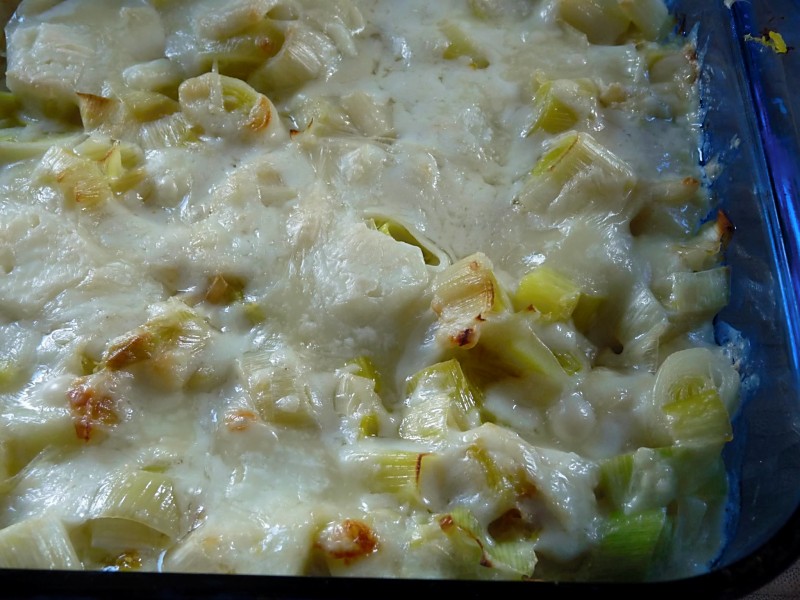
I'd like to have something profound and philosophical to say in this post, but I don't. I think this is largely because of the evilness of pomme d'or squash. Oh, they're cute alright, and small and innocent-looking. They have smooth skin and are the size and color of an orange. Yes, they have that rosy golden glow of autumn and Thanksgiving right around the corner. Oh and they smell nice when cooking, and taste delicious. But don't let that fool you. They are mean, nasty buggers.

First of all their skin is tougher than an armored tank. I don't see why armies bother with Teflon when a soldier covered in these little squashes would be near invincible. Okay, ridiculous-looking, but invincible! (Besides there's a long tradition of ridiculous outfits and invincibility - just look at most classic superheros.)


I should have taken Camille's advice and roasted/steamed the squash whole, but I thought it couldn't be THAT hard to cut them in half and take out the seeds. I suppose it was a good idea... until I almost lost a finger. I had to cut into them so hard that when I felt the knife slip onto my index finger, I was sure it was gone for good! Luckily my reflexes are a lot better than I give them credit for and, besides scaring myself half to death, the damage was minimal.

Anyway the end result, a gratin based on a combination of Camille's Squash Apple Crumble and Anne's Gratin de poireaux au four, was absolutely delicious. How delicious, you ask? I might consider cooking pomme d'or squash again just to have it.


For my American readers: this would be a perfect Thanksgiving side dish, and you could substitute other types of squash, since pommes d'or are pretty rare in the US.

6 pomme d'or squash (850g/30 oz - invincible skin included)
sea salt
sage

5 small leeks (or 3 large)
1-2 Tbsp butter
2 cloves garlic, minced
splash dry white wine
1/2 cup cream

100g (about 1/2 cup) goat cheese (i.e. chabichou de poitou), sliced
100g semi-hard sheep cheese (i.e. etorki), grated


Preheat oven to 375ºF/190ºC. Cut the squash in half (if you can) and scoop out the seeds. Place halves in a baking dish with a bit of water. Drizzle olive oil on squash and sprinkle with sea salt and sage. Roast until the squash is soft. Remove from oven and scoop flesh into another baking dish. Top squash with half the cheese (both kinds).

In the meantime, wash and chop the leeks. Melt the butter in a large frying pan and add the leeks and garlic. Cook until leeks are soft (about 15 min). Add a splash of white wine and cook another minute. Remove from heat and add the cream, stirring well.

Pour the leeks on top of the squash and top with the rest of the cheese. Put in the oven for 15-20 minutes, until the cheese is melted and starts to turn golden. Serve hot as a main or side dish!

03 February 2009

Roasted Pepper and Feta Dip

En français ici.
Over at Equal Opportunity Kitchen, there is always something exciting happening. You may think I'm exaggerating, but kid you not. Currently they are participating in events all over the blogosphere, planning a wedding, and curing world hunger, all while posting delicious recipes.

As part of the wedding planning, they are bringing back their Tried, Tested & True event, this time wedding edition, dun-dun-daaaaaa. I'm very excited for Psychgrad and R and, so, was eager to contribute to this event (you can still submit until Feb. 20th).


As some might have noticed from my Lamb with Hearts of Romaine recipe, I've been reading cookbooks about Mediterranean and Greek cooking (much more about that on the lovely blogs of both Ivy and Maria), and having fun experimenting. Feta dip comes up in more than one list of Mediterranean recipes in many different forms. This is my own version that I've tested 3 or 4 times now and think I have gotten to perfection. It can be served on slices of bread, or as a dip with chips and/or vegetables. This recipe is a good appetizer/side for 3-4 people, but it's easy to make a large batch and wouldn't take much longer. I don''t hesitate to serve this recipe to guests for any occasion.

1 yellow pepper
1-2 green chili peppers (I actually used piment vert, a long hot pepper found all over France. I think it might be from northern Africa. You can add more or less hot peppers depending on if you want it spicy or not. Also the longer you roast the hot peppers, the less kick they'll have.)
1 cup feta, crumbled
1/3 cup olive oil
juice of 1/2 a lemon
black pepper to taste

parsley, chopped for garnish

Core and seed the yellow pepper and chili peppers. Quarter and place on a cookie sheet. Drizzle with olive oil and roast until tender and starting to brown (about 20 minutes). Remove from oven and put aside to cool.

When cool enough to touch, peel the peppers. (If you're in a hurry you can do without peeling them, but it makes the dip smoother if you do.) In a mixer, blend all the ingredients together (except the parsley). Taste and adjust seasoning if necessary. Garnish with parsley and serve!

18 January 2009

Lamb with Hearts of Romaine

En français ici.
Recently the chiropractor told me I needed to eat more fruits and vegetables and less starchy foods. I love fruits and veggies, no problem there but, in the winter, I also like to eat the kind of warming foods that make you feel good and cozy when it's cold outside. (Not to mention that winter veggies tend to be pretty starchy!) It's not like I'm going to survive on salads, something that would be possible in the summer...

But wait! What about cooked salads? Warming AND fits the veggie requirement. That's when I remembered that there's a competition right now on the cooking blog Panier de saison for recipes with cooked greens in them: Cuisinez vos salades ! The idea is to try cooking a green leafy vegetable that is not usually cooked (so, no spinach for example). Ok, so it's in French, but I've decided to translate the recipe I entered so that you all can follow along.


Lamb with Hearts of Romaine

1kg lamb, cut into medium-sized pieces
4 Tbsp olive oil
1 onion, chopped
1 clove garlic, minced
salt, pepper

4 small hearts of romaine
4 Tbsp fresh dill, minced

2 eggs
1 tsp cornstarch
juice of 1 lemon


Heat the oil in a large pot over medium heat. Add the onion and garlic and let cook 2-3 minutes. Turn up the heat and put in the lamb to brown for about 10 minutes, turning over the pieces frequently.

Salt and pepper to taste and pour in enough water to just cover the meat. Cover the pot and let simmer about 1 hour.

Wash and chop the hearts of romaine. After the meat is done simmering for an hour, add the lettuce and dill. Stir and cover the pot. Let cook another 15 minutes before removing from heat while you prepare the sauce.

In a bowl, beat the eggs. Dilute the cornstarch in a bit of water and add to eggs, beating until well mixed. Add the lemon juice and, while continuing to beat the mixture, slowing pour in 1/2 a cup of the juice from the pot that the meat and vegetables were cooking in.

Add the sauce to the meat, only stirring very gently. Put back on the burner on low for a couple minutes but be careful not to bring to a boil or the sauce might curdle. Serve warm with dill garnish.

19 December 2008

Traditional Christmas Shortbread

En français ici.

One of my favorite things about Christmas, is that it's a holiday about giving. I love giving presents, almost more than getting them, seeing people's eyes light up the way they do when you've found the perfect gift. I don't think this means that Christmas has to be about spending as much money as possible, though, or getting the newest, most high-tech gadget (although that can be fun sometimes). As I mentioned in my last post, one of the best things to give to all your friends for the holidays is homemade baked goods, especially when you want to give a little something to a lot of people. When I was little, I was part of a large church community and all of the families exchanged presents. Unable to buy gifts for that many people, most of the presents were homemade, often edible and they became traditions. Every year, we looked forward to a special spicy nut mix from one family, peanut brittle from another, yogurt-covered pretzels from a third etc.

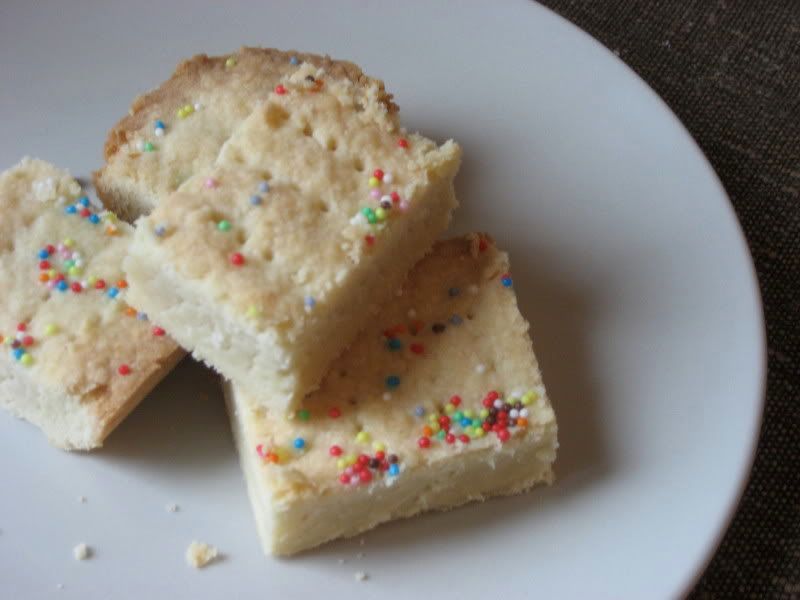
My contribution to this tradition every year was homemade shortbread. Super yummy, easy to produce large batches and simple to make even for an 8-year-old (with some parental supervision I believe, although the way I remember it, all my dad did was the math to figure out what baking pans to use). The recipe I've always used was found in the Joy of Cooking, back when I was eight (ok, some of you are going to say I should stop acting like that was so long ago, I'm not that old, but 17 years makes a difference!). When they revised Joy of Cooking, the recipe got changed. I still use the old one. It's still one of the simplest recipes I know, and crumbly and rich and sooo good and... Well just try it. You'll see.


Preheat the oven to 325F (170F).

Cream:


1 cup butter, softened

Sift together:

2 cups flour
1/2 cup confectioners' sugar
1/4 tsp salt

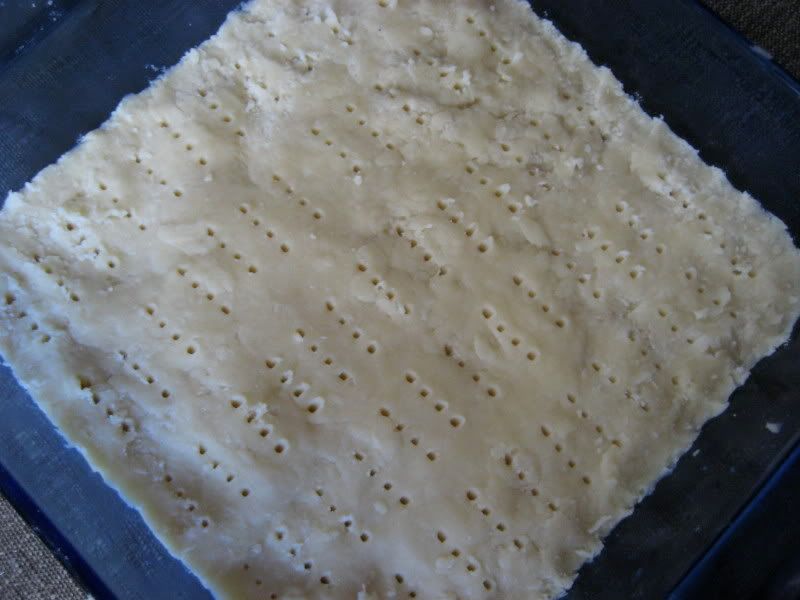
Blend the dry ingredients into the butter. I recommended rolling up your sleeves, washing your hands and getting them involved in the process. (The dough will be crumbly, and that's a good thing.) Pat into an ungreased 9X9 inch baking pan and press the edges down. If you want to decorate your short bread, sprinkle colored sugar on top (or the decoration of your choice) before baking.

Pierce with a fork every 1/2 inch. Bake for 25-30 minutes at 325F (170C). Cut squares while warm (or at least score deeply where you want to cut) in the pan. Wait until cool before removing them. If you try to cut them cold, they'll crumble badly.

I'm submitting this recipe to Food Blogga's Eat Christmas Cookies Event:

Click on the logo to see the amazing array of recipes already submitted.

Happy Holidays!